
01 · Scent + narrated scene
Scent patches + narrated audio
Scent patchNatural essential oils.
Four distinct scents.
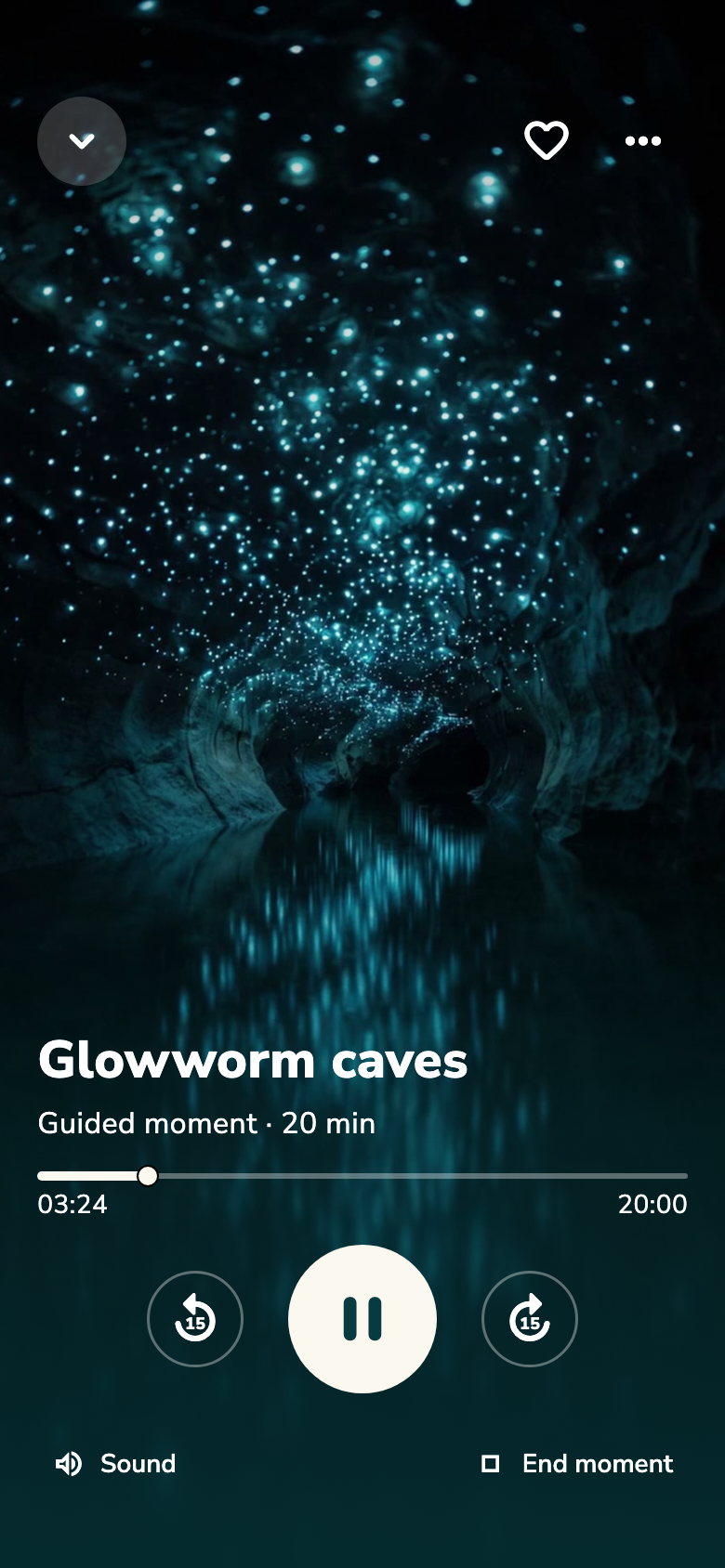
Matching sceneGlowworm Caves
Each scent comes with a matching narrated scene. Choose a world, press play, and take a short break.
Join free. The $1 price reservation is optional.
Coming to Kickstarter. We're still working on the app and audio.
Four scents. Four matching scenes.
After a meeting or before heading home, choose a world and take ten minutes.

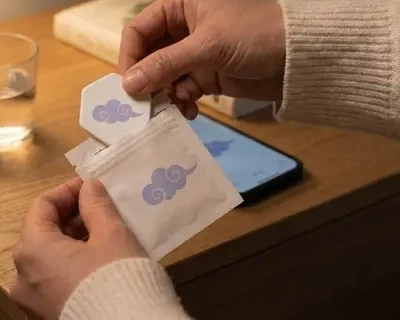
Take out one of the two patches inside.
Don't put it on your skin.
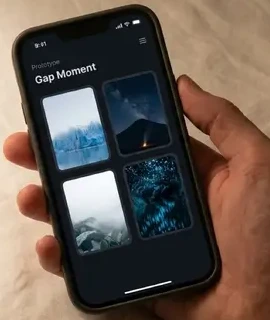
In the app, choose the recording for your scent, then press play.
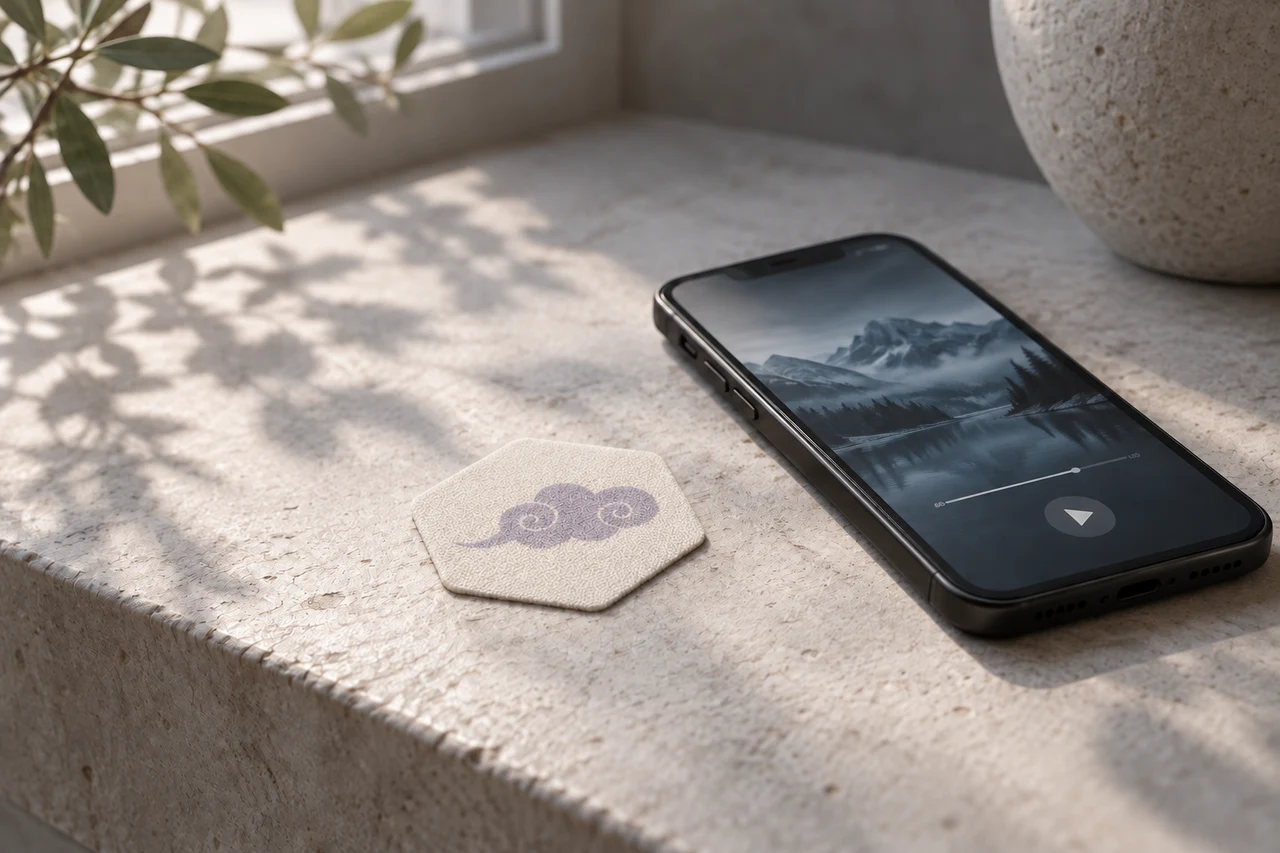
Concept images. Final packaging and app design may change.
LISTEN
Try a free one-minute sample.
Pick a female or male voice, or just listen to nature sounds.
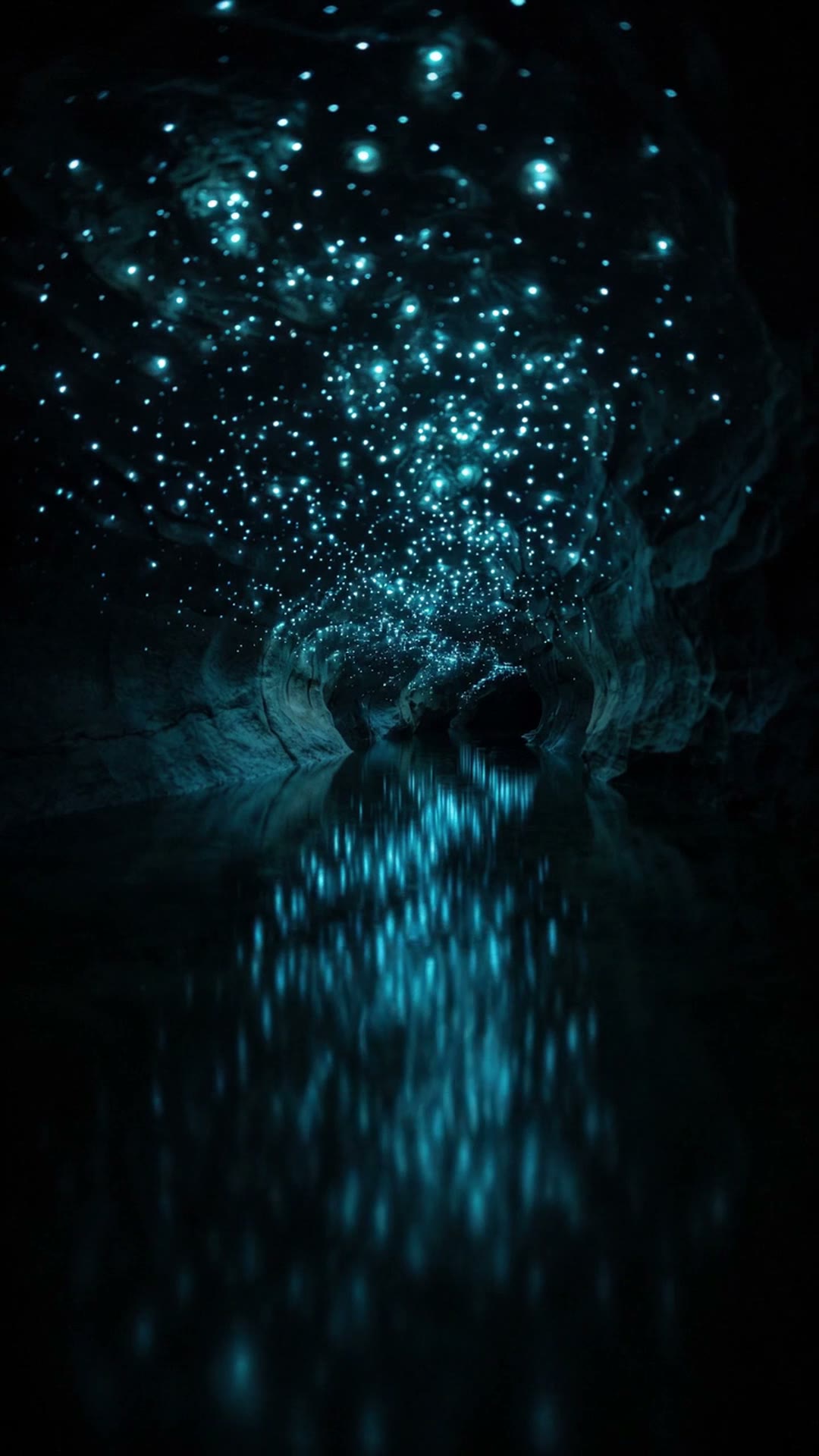
Thousands of tiny lights glow over still water.
The image didn't load. Select this scene again to retry.
FROM THE RECORDING
“A path leads from wet green ferns into a limestone cave.”
Female voice selected.
Both voices read the same passage.
Fresh moss and the air right after rain.
We're still finalizing the scent formula.Each scent is inspired by the place in the recording.
App in developmentPick a scene and a voice, then choose how long you'd like to listen.
After a few minutes, the voice stops and the nature sounds keep playing until your session ends.
Here's a 20-second look at the app we're building.
6 months for additional contentThe six months start when you activate access. It won't renew automatically. We'll confirm what's included before launch.
$29Reserved Kickstarter launch price.
Requires a refundable $1 reservation.
Shipping and taxes are extra.
That's $10 less than the planned $39 public early-bird price.
The kit isn't on sale yet. Join free for launch updates; reserving the $29 price is optional.
It's a kit of scent patches with narrated recordings to play on your phone. The scent comes from the patch, which has no electronics. You can listen without a patch too.
No. Place it nearby, not on your skin.
Before launch, we'll share how long the scent lasts and how to store the second patch after opening. There are two patches in each pouch.
A candle and music may already work for you. Gap Moment pairs each scent with a narrated nature scene, so you can choose them together. There is no flame or diffuser to set up.
You'll hear a female or male voice describe a place in nature, with nature sounds in the background. Choose Nature only if you'd prefer to listen without a voice. Listen to the one-minute samples.
The narration lasts a few minutes. Nature sounds keep playing for the rest of your session. We suggest a ten-minute break, but the narration itself is shorter.
No. Your included access won't renew automatically. The $1 reservation doesn't start a subscription. Any subscription would be a separate purchase.
No. It is made for everyday breaks, not to diagnose, treat or prevent a medical condition.
Joining the email list is free, but it doesn't reserve a price. The optional $1 reservation holds the planned $29 Kickstarter price. You'll still pledge $29 for the kit on Kickstarter. We'll refund the $1 once we confirm your backing. See reservation details.
You can keep listening to the four recordings in your kit. Only access to additional content is limited to six months, starting when you activate it. We'll confirm what's included before launch.
Leave your email and we'll let you know when our Kickstarter campaign launches. Unsubscribe anytime.
You're on the list. We'll email you when our Kickstarter campaign launches.
A refundable price reservation. Buy the kit separately when our campaign launches.
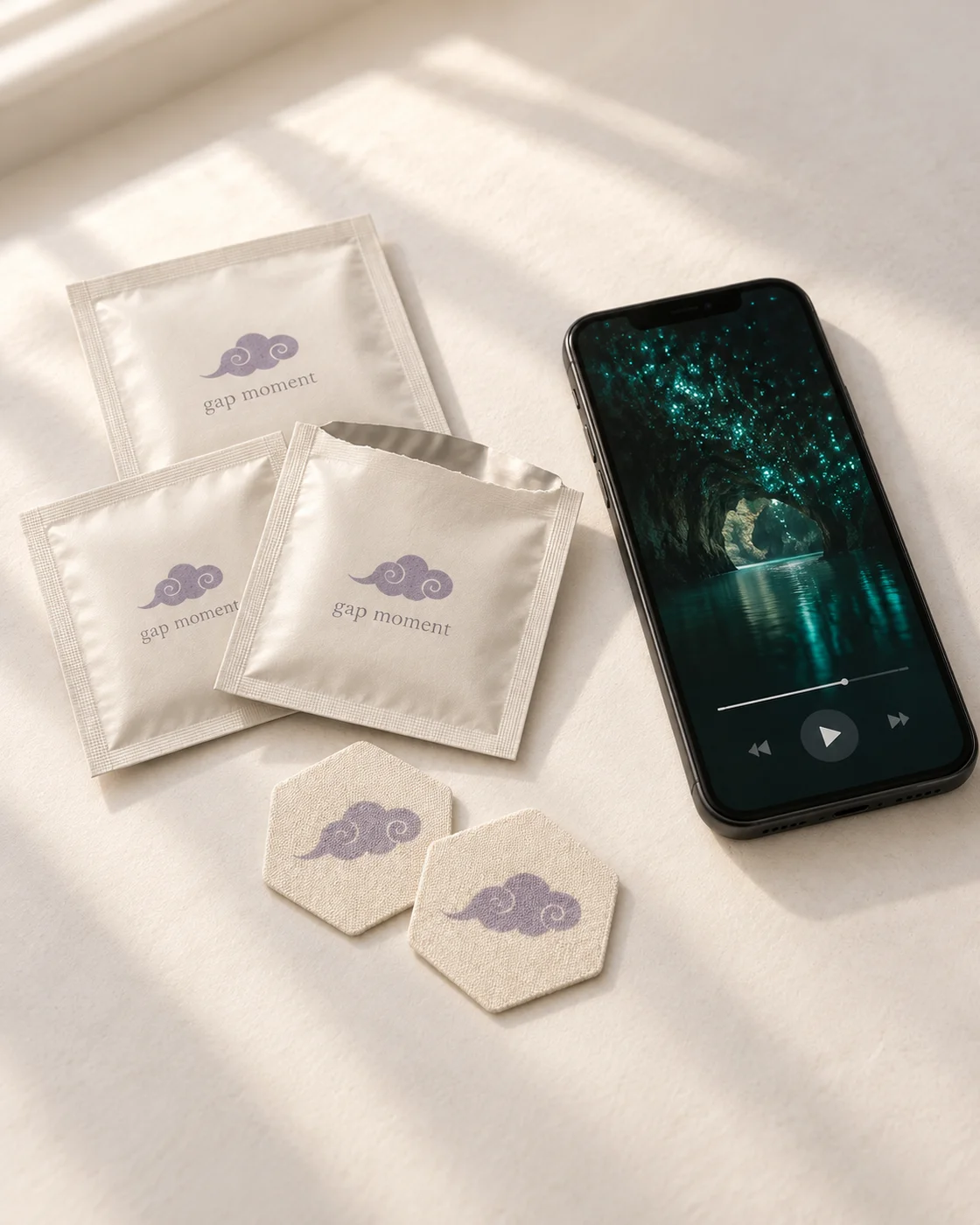
40 scent patches and 4 narrated recordings on your phone.
Four scents, 10 patches each. Packed in 20 sealed pouches, two patches per pouch.
One for each scent. Choose a female or male voice, or nature sounds alone. You can still listen to the four included recordings after the six months end.
The six months start when you activate access. It won't renew automatically. We'll confirm what's included before launch.
$1 todayUSD · refundable reservation
Limited to 300 reservations.
The reserved $29 price is $10 less than the planned $39 public early-bird price.
The kit is a separate $29 pledge on Kickstarter. Your $1 is refunded after we confirm your backing; it is not deducted from the kit price.
Changed your mind before launch? Email us and we'll refund your $1 in full.
Secure checkout with Stripe.
You won't be charged for the kit here.
Shipping and tax are extra on Kickstarter.
No thanks, just keep me posted
You’re on the free list. We’ll email you before launch.
Your $1 reserves the $29 Kickstarter price for a kit with 40 scent patches and four narrated recordings you can keep. Each scent comes in 5 pouches of 2 patches. Access to additional content lasts 6 months from activation and does not renew automatically; we'll confirm what's included before launch. We have 300 $1 reservations in total. Joining the free email list doesn't reserve the price.
This reserves the price. You'll buy the kit separately on Kickstarter for $29, not $28, if you decide to back it. Nothing ships today. Shipping and taxes are extra.
To get a full $1 refund before our Kickstarter campaign launches, email hello@gapmoment.com from the address you used at checkout. We'll return it to your original payment method. We'll also refund the $1 once we confirm your backing. If your original reservation promised a refund when Kickstarter opens, that promise still applies. Full refund terms.
We'll honor any commitments made with an earlier reservation. Email hello@gapmoment.com if you have a question about yours.
These images show concepts for the packaging and app. Your 4 original recordings remain available after 6 months.